Jeju Island: Basic Geography
Jeju Island is South Korea’s largest island located off the southern coast of the Korean peninsula. It is a volcanic island shaped like a horizontal oval that was formed by an underwater volcanic explosion some 2 million years ago. The nation’s tallest mountain, Hallasan Mountain, which is also a shield volcano, is located in the center of the island.
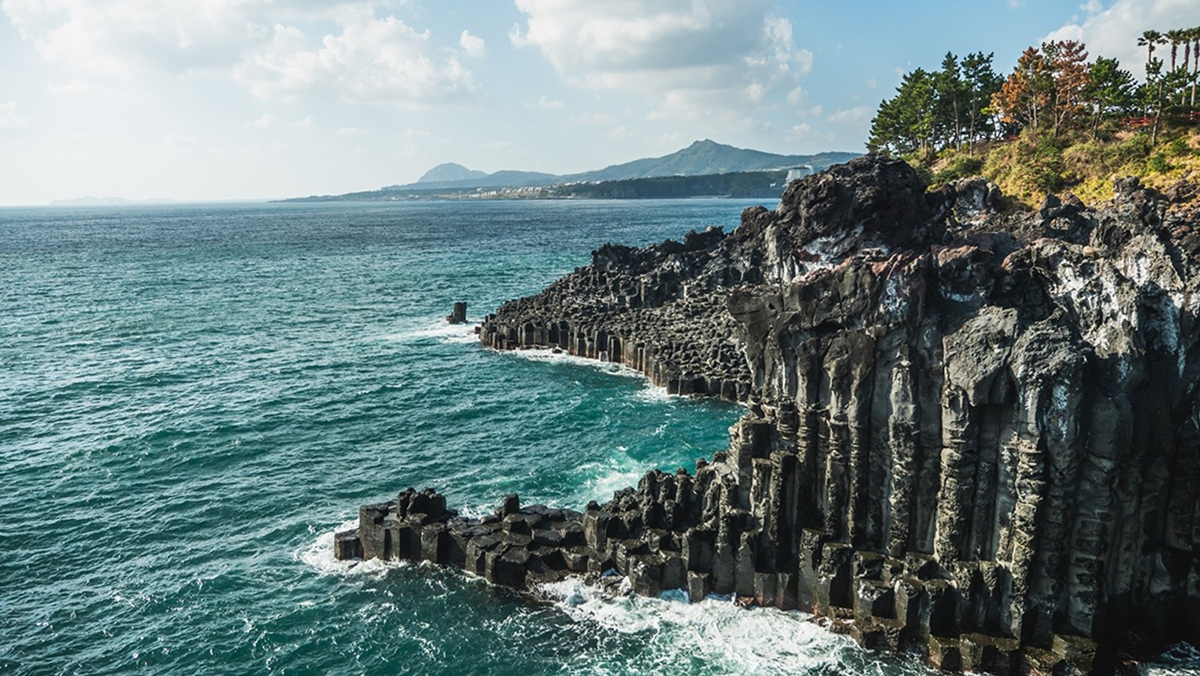
Much of the island is made up of basalt rock and lava formations, making it very unique to the rest of Korea. The island is sectioned in two geographical halves, with the northern part called Jeju-si, or Jeju City, and the southern part called Seogwipo-si, or Seogwipo City. Although these are the technical geographical terms, locals refer to “Jeju-si” and “Seogwipo-si” as being the populated areas where City Hall buildings are located.
Jeju Island Climate & Weather
Jeju Island has a temperate humid climate, which means the winters are relatively mild and the summers are humid and hot. Summers come with a monsoon season that typically lasts about 2 weeks, and typhoons are common throughout the summer. The hottest months are July and August, which also coincides with beach season, when beaches are officially open to the public.
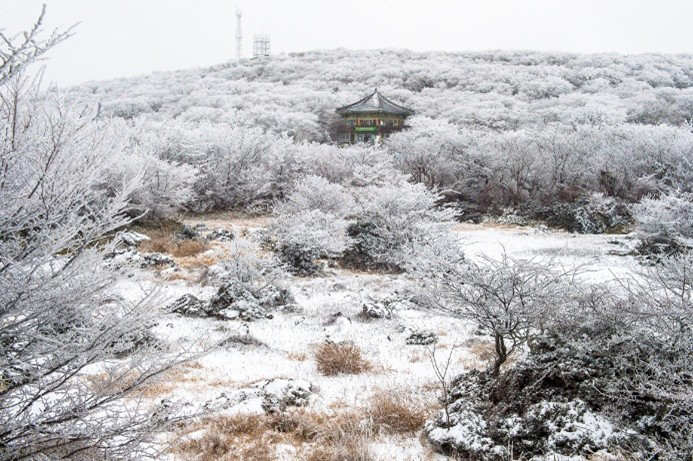
In winter, snow falls mostly at the top of Hallasan Mountain, and very little snowfall happens in the cities. Temperatures are typically similar at lower elevations, but Seogwipo, the southern part of the island, is usually warmer and sunnier than the north.
Jeju’s Autumn Season: Whimsical and Romantic
Autumn (September to November) in Jeju is quite beautiful and perfect for romantics. As hot summer days cool down, the temperature gets wonderfully pleasant, and you can enjoy mild days still bright with sunshine.
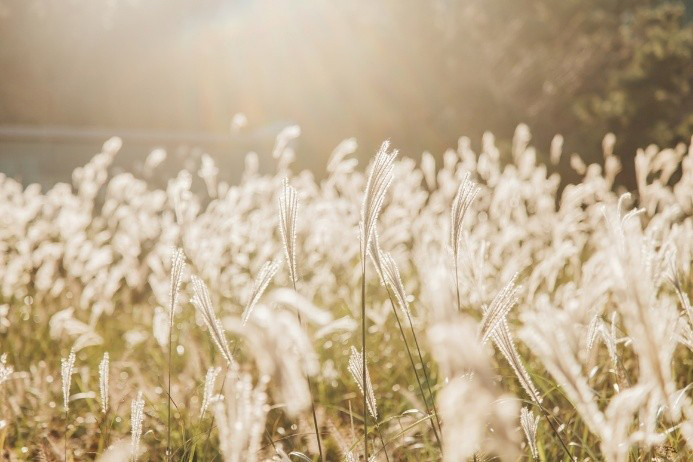
The fall is the perfect season to visit oreum, the iconic volcanic cones of Jeju Island, as many are covered in fields of swaying silver grass. Pink muhly is another grass that grows in the fall, and the fluffy pink plant has become a popular photo backdrop.
If you come to Jeju in autumn, you won’t want to miss your chance of seeing vast fields of silver grass. As the fluffy, feather-like heads of silver grass sway gently in the wind, you can’t help but be in awe of the beauty of nature.On the east side, Ttarabi Oreum, known as the “Queen of the Oreum”, is one to try, along with Akkeundarangswi Oreum. Saebyeol Oreum is a wonderful choice if you’re on the west side.
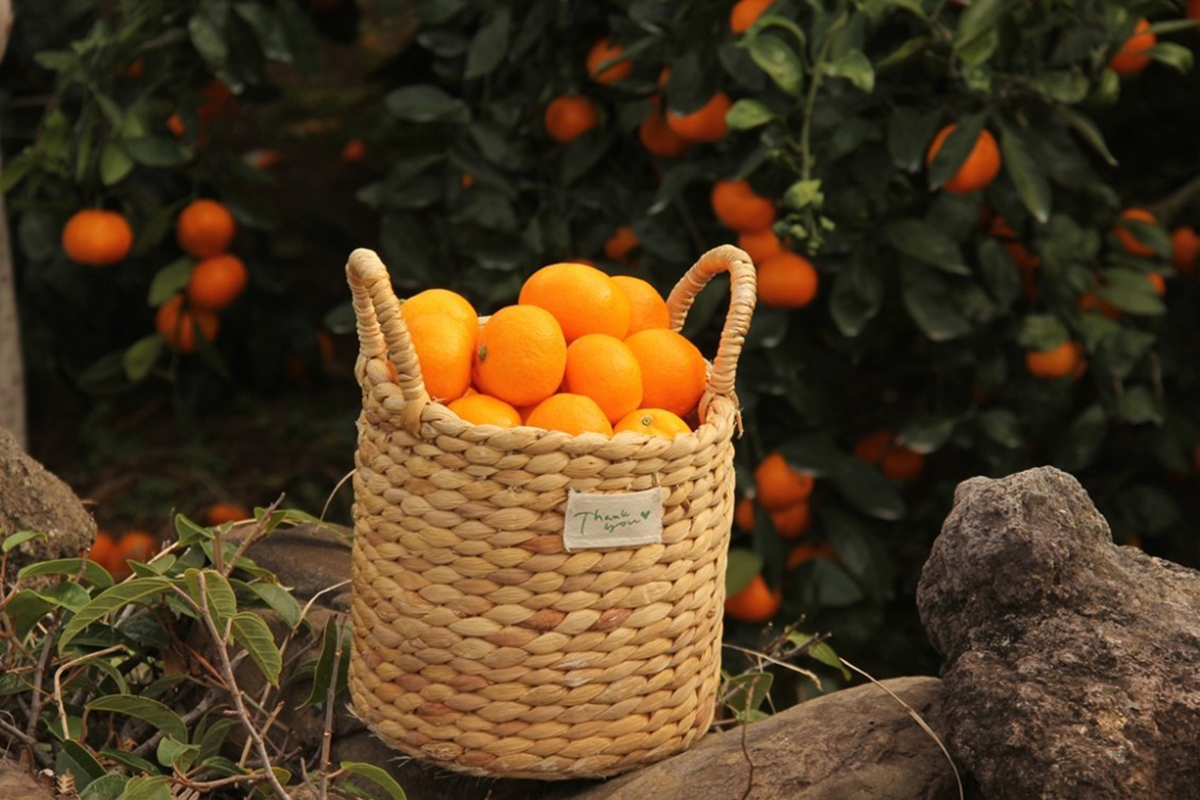
The harvest for Jeju mandarins begins in November, and there are several different citrus-related activities that you can partake in around the island. Mandarin picking is a popular activity where you harvest your own mandarins while eating as many as you want while you’re there. You can pick the best fruit for yourself and just pay by the box. The famous Jeju Citrus Expo* also takes place around this time, so be sure to be on the lookout for that.